
$80M DTC Brand Hired 2 Top-Tier Creative Strategists
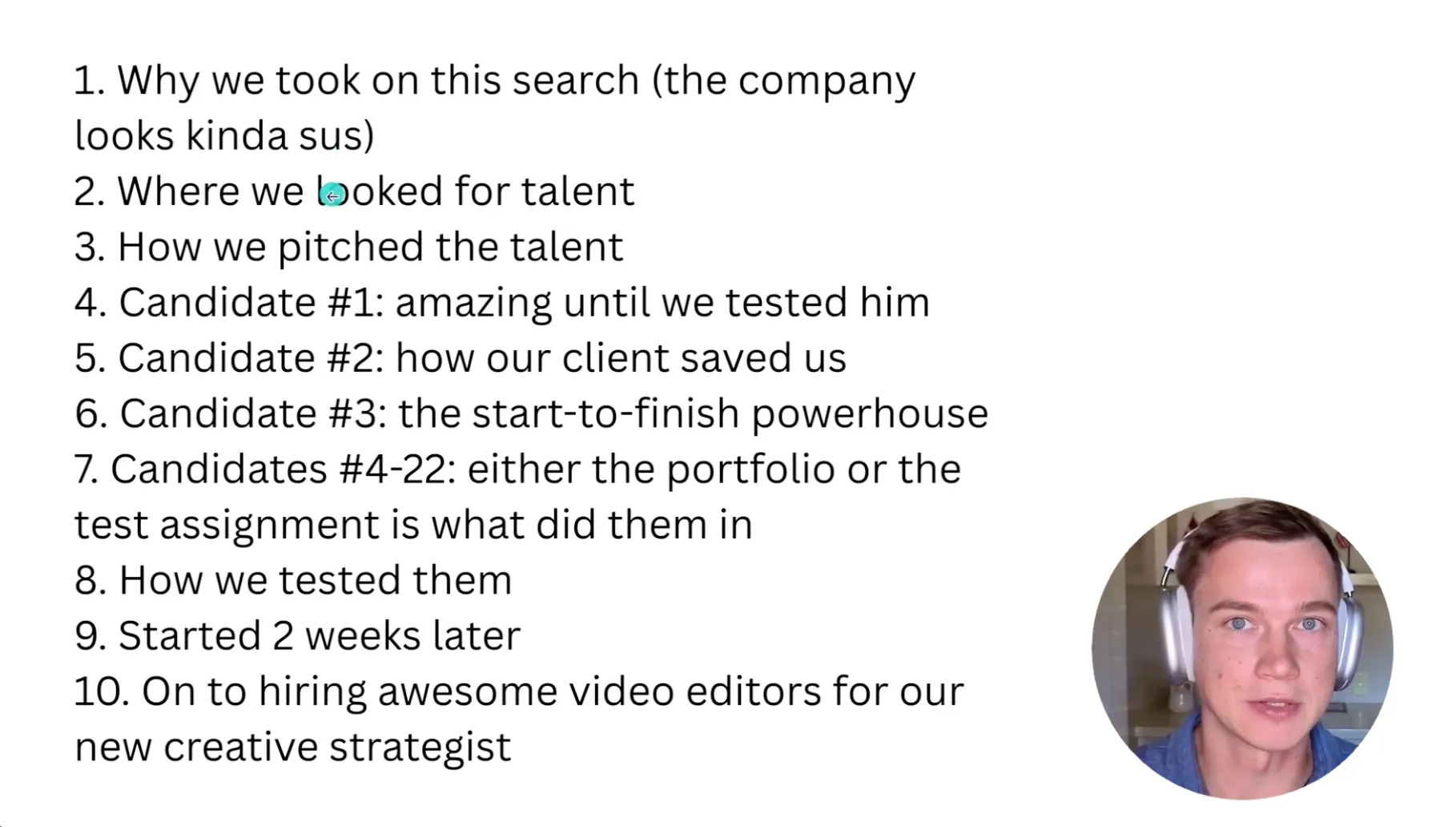
We get a lot of requests for creative strategy roles. Most of the time we say no.
The demand for great creative strategists is much higher than the supply. So unless there’s something special about the brand, we say no, because we know we can’t deliver.
This time was different.
I broke the whole search down on video:
At first glance, the company looked kind of sus.
I put the brand name into Google and the website was dogsh*t. Their Trustpilot had 29% one-star reviews. Not great either.
The total volume was low, so it was probably just dissatisfied people bothering to leave reviews, but still, not a great start.
Then I checked their Amazon. I was completely blown away.
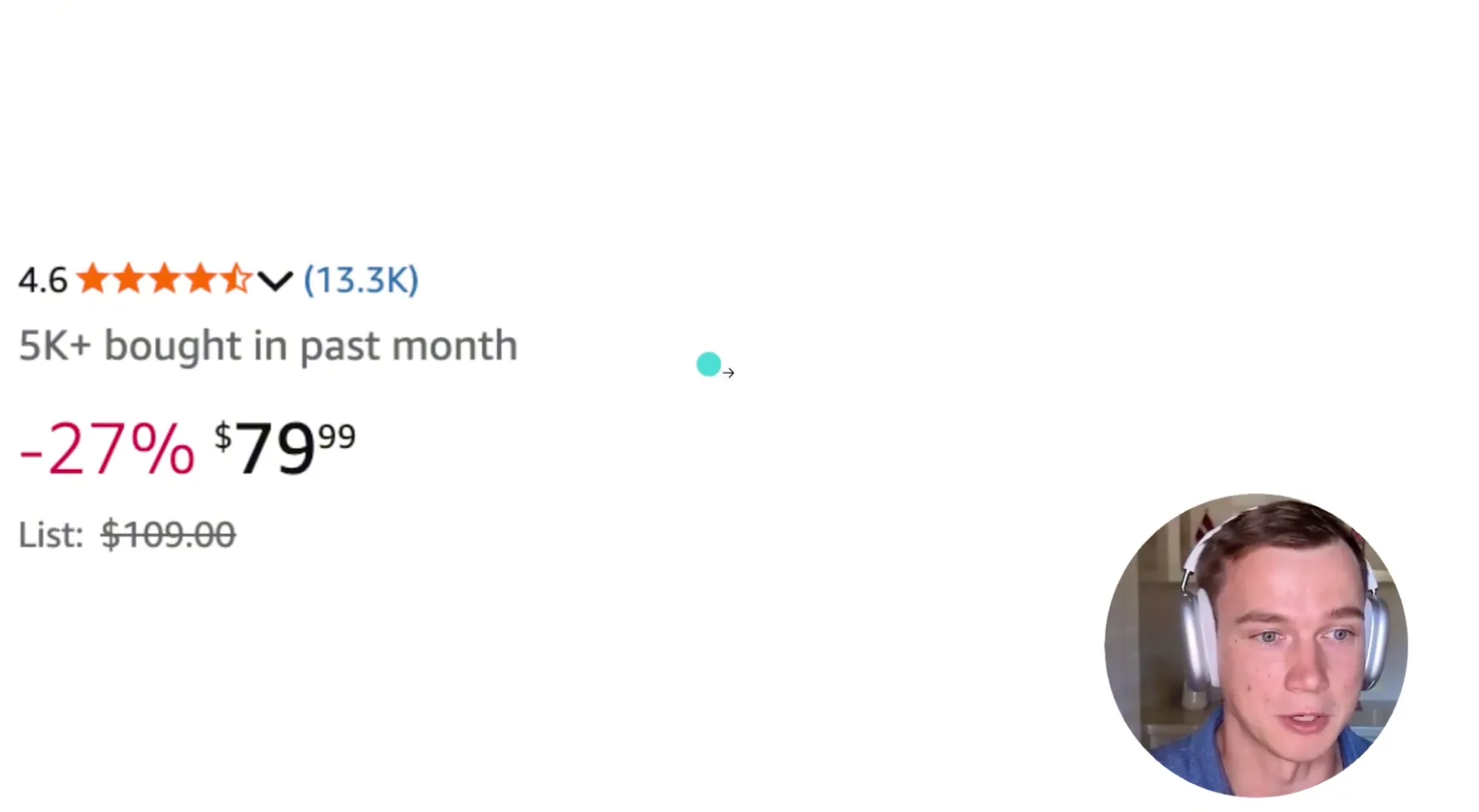
4.6 stars. More than 13,000 reviews. 5,000+ bought in the past month, at a high price point, and Amazon isn’t even their main channel.
Everything else can be misleading. That you can’t fake. So I knew these guys were for real.
The founders had started in dropshipping. But they got really good at product development, they’d had to build hundreds of products. Eventually they moved into a new vertical and built something people actually wanted, that they knew how to market and demo.
They hit $80M in their second year. Profitably. That’s mind-blowing.
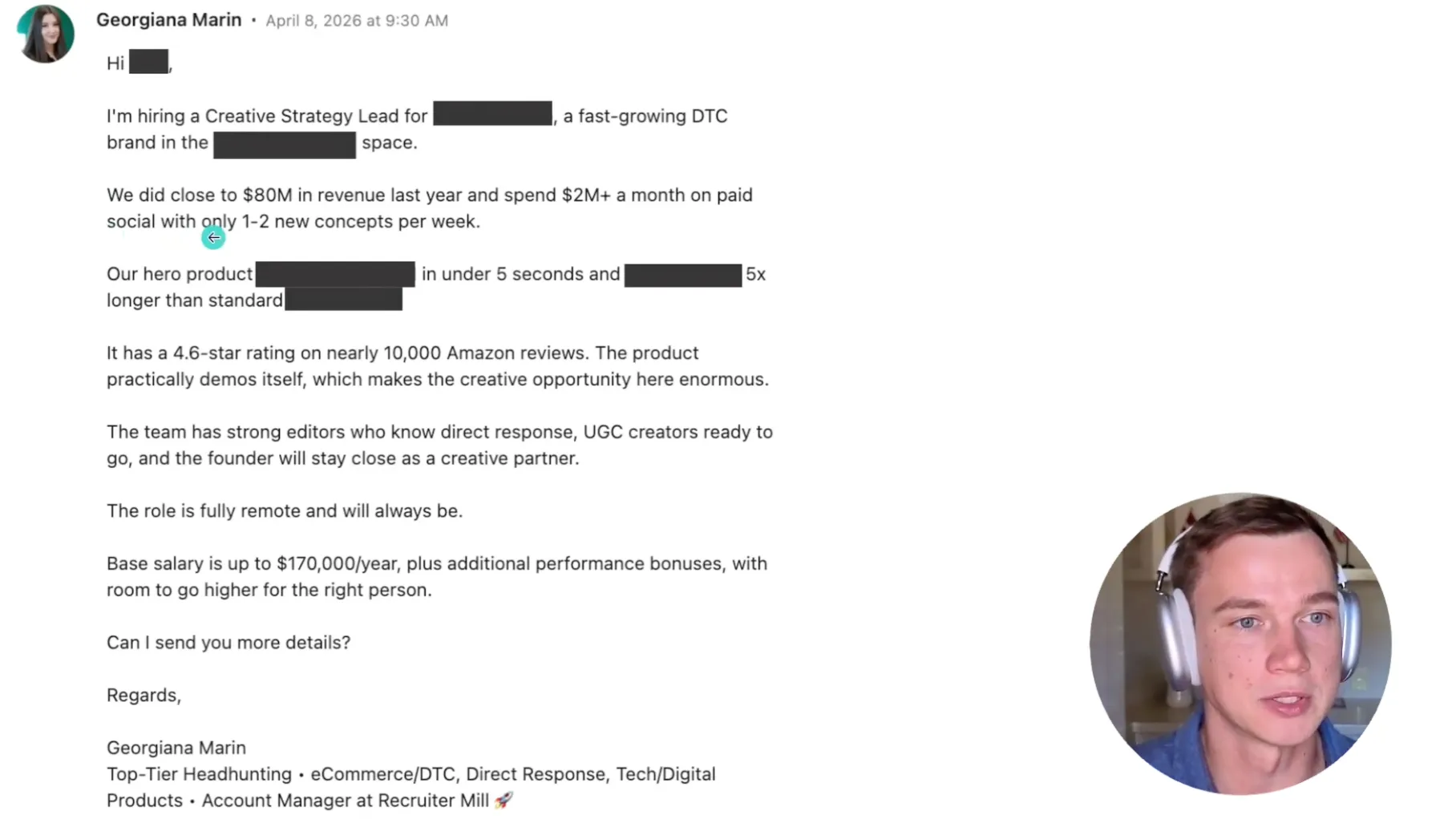
For all that, their creative strategy was still underdeveloped. They were doing that volume on only one to two new concepts per week.
If you know DTC, that’s insane.
So the pitch to candidates was simple: this brand is already winning, come build a proper creative strategy function with us.
That combination matters more than people realize. The brand is already successful, and everyone wants to associate with a winner.
If you have to come in and save a sinking brand, most good people say no. Why risk it? They’ll probably go down with the ship. But if the brand is winning and already has great creative, there’s nothing to gain either. You either hold the level and nobody notices, or you slip and everyone does.
Already winning, with one underdeveloped area you can own, is the perfect setup. That’s why we led with it.
Where do you even find these people?
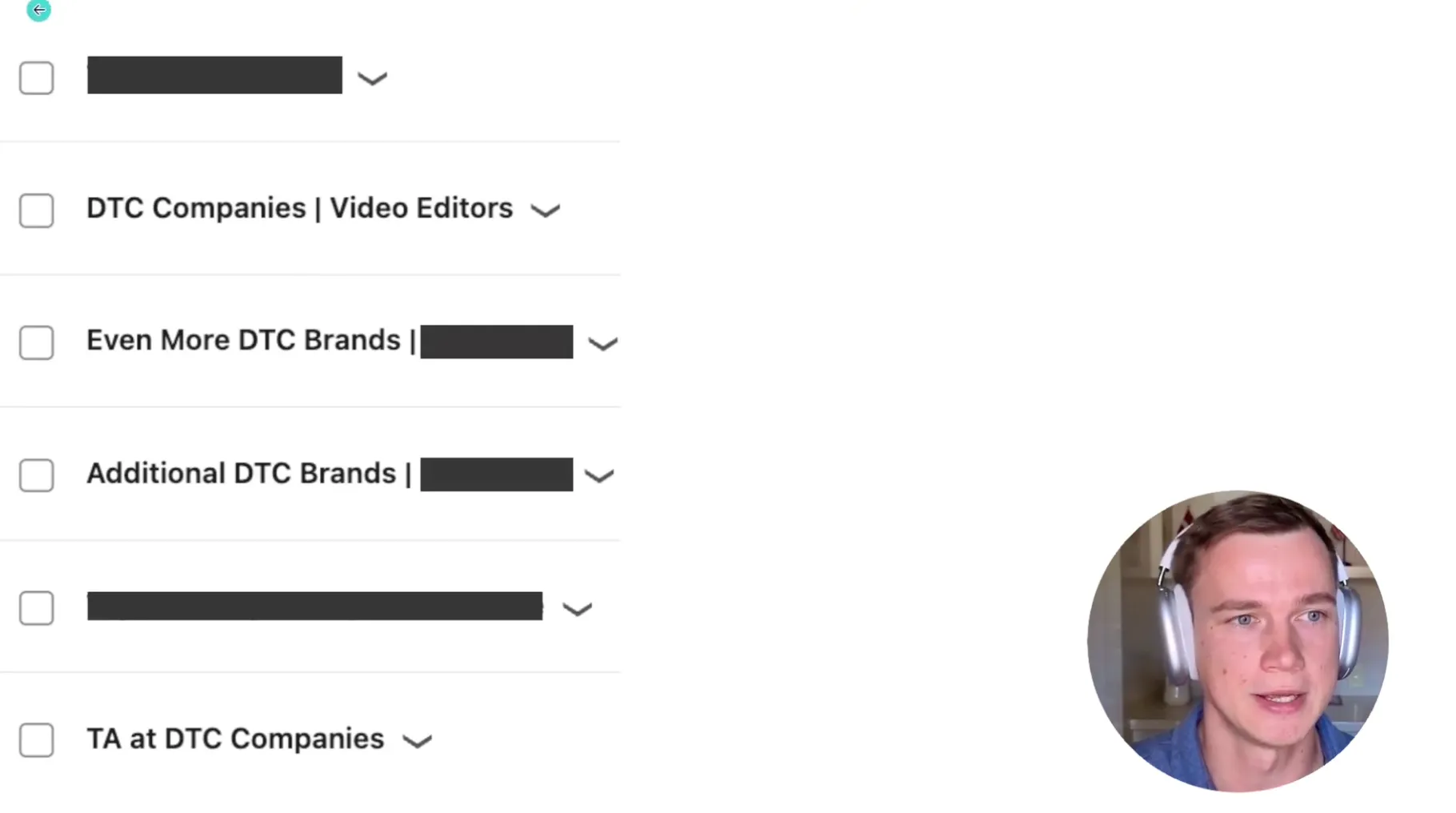
We keep saved searches on LinkedIn: every DTC brand that’s doing well, the creative strategists who work there, and every creative agency in performance marketing. That’s where the good ones are. It’s not complicated once you know where to look.
On salary, we went up to 170. That’s above market for a creative strategist and reasonable for a creative strategy lead. We wanted someone senior, and that turned out to be about right.
We approached close to 160 of the most relevant people in the world for this role.
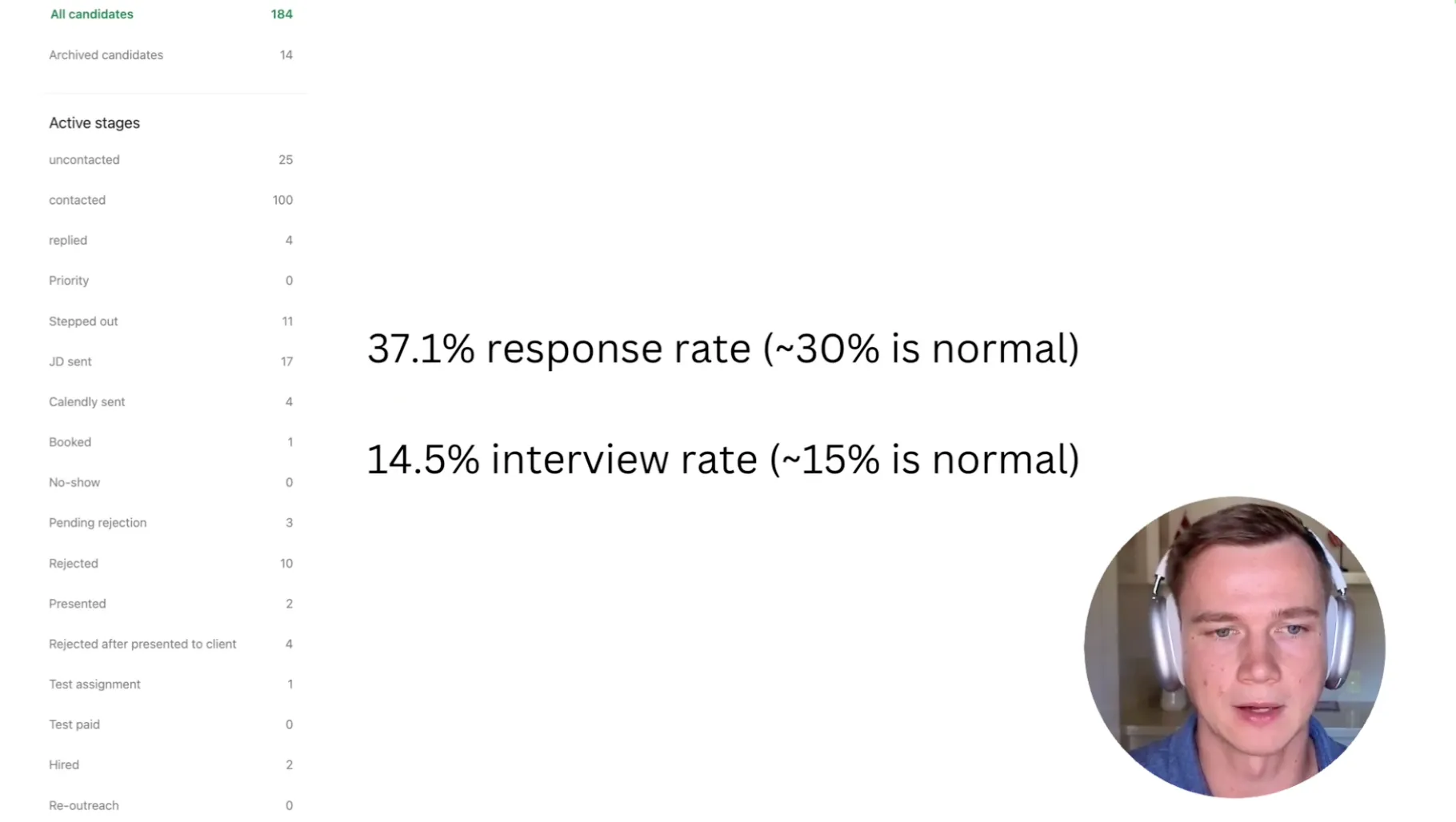
37.1% replied, which is slightly above normal for the US.
But the metric that actually matters is the interview rate: of everyone you approach, how many get on a call. Ours was 14.5%. Around 15% is what we expect, and getting 15% of the best 160 people in the world on a call is really good.
The client had plenty of strong options.
The first candidate looked like the hire.
A lead creative at a strong brand, managing serious daily ad spend. Years at a marketing agency, so he’d seen every persona, message type, and awareness level. He could walk us through a winning ad with over $2M in spend.
He knew ROAS, CPA, LTV, the funnel metrics, the research, AI, creative systems. He was nuanced, which is the first thing we look for in an interview, and he’d done his homework on the brand.
10 out of 10. The founders had a follow-up call and loved him too.
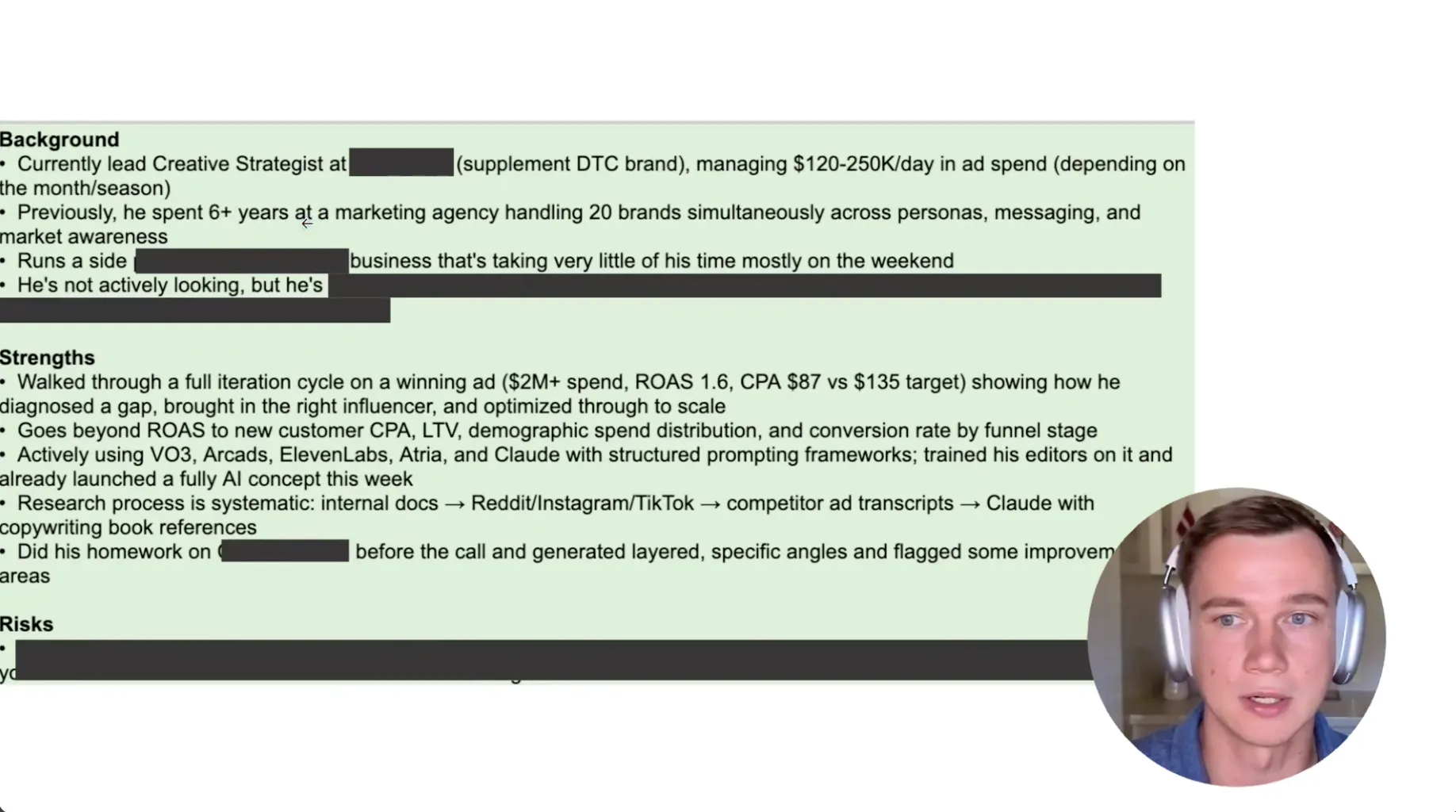
Then came the test assignment. He did a good job, but not as good as two of the others.
That’s the main lesson from this search. For creative roles, let the ads speak for themselves. A great interview can’t save average work.
One thing I should add. Before we book anyone for a call, we look at their portfolio. If we don’t like it, we don’t book the call.
The ads speak for themselves. If someone doesn’t have good ads, they can’t save it in the interview. So always ask for a portfolio, and always test these people.
The second candidate, the client saved us on.
At first we thought she was all right but probably not going to make it, and we told them not to waste their time. They looked anyway and came back: wait, this person is really strong, we need to talk to her.
We’d said she wasn’t stronger than our first two options. The client looked closer and said no, this is actually pretty genius. Credit to them.
We’d have liked her to push harder on metrics, which happens with creative strategists sometimes, but she thought in systems and had worked with big volumes. Then we gave her the test assignment and she absolutely smashed it. That was the decisive factor.
They were open to hiring two people, so they did. The other hire was a favorite from start to finish.
He’d worked at a strong direct-response creative agency, with clients spending up to $12M a month, which is insane. He’d worked across relevant verticals including ours, and had been the sole creative strategist for a brand, which mattered because this was a smaller team. Well versed in AI. A few small risks, nothing serious.
When we tested him, he was deliberate, which we love to see.
Here’s how we tested.
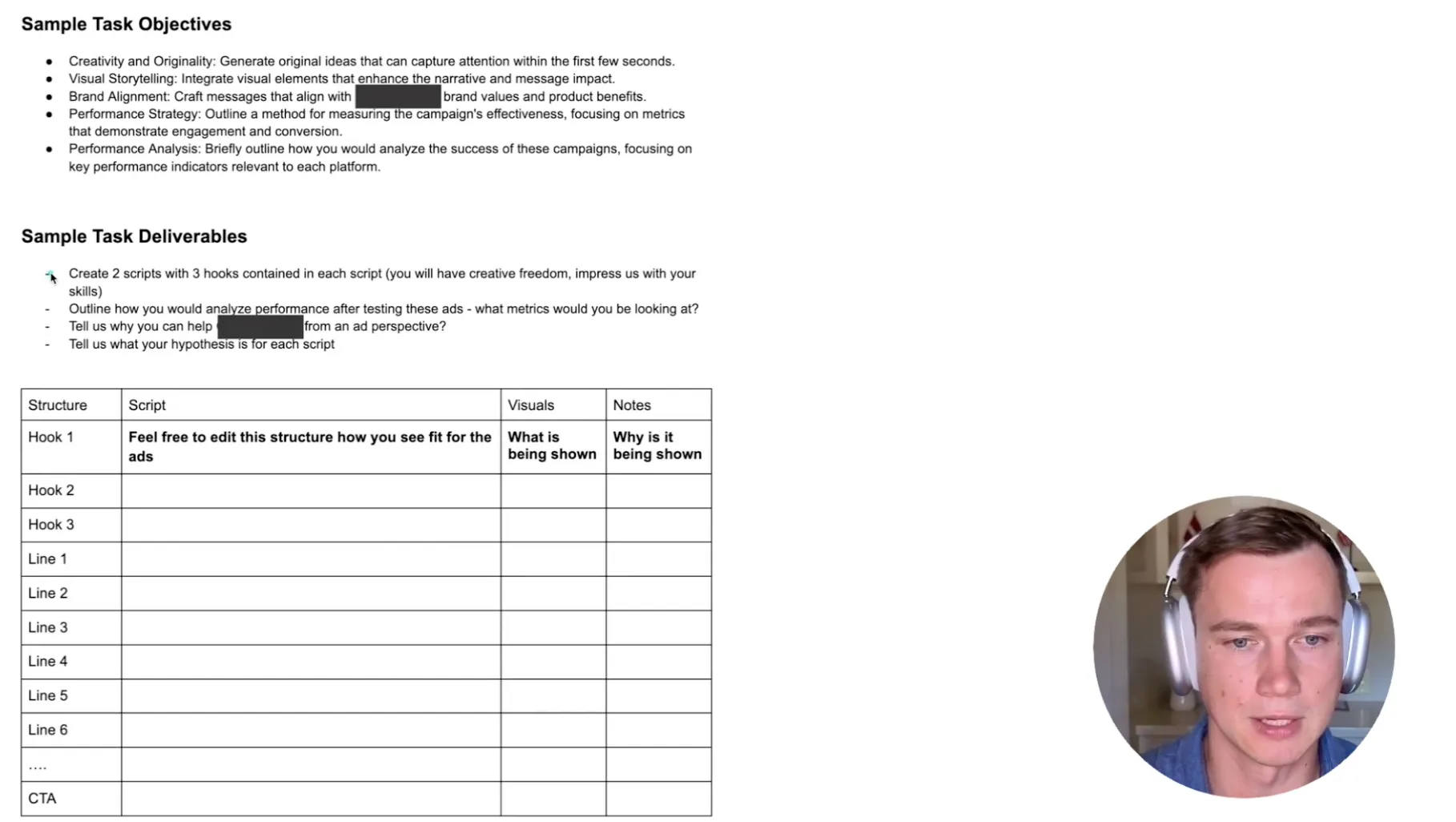
First, a brief with all the context: the website, the landing page, the ad library, the key benefits, the competitor ad library, and our best-performing ads. On the job they’d see all of this anyway, so we gave it to them up front.
Then the brief itself. We were looking for creativity and originality, visual storytelling, brand alignment, performance strategy, and performance analysis. The main deliverable was two scripts with three hooks each, in a set format.
Later we asked for a third script around a seasonal gifting angle, to see what special angles people would come up with.
And we paid every candidate for their work. It was a full day, sometimes two.
They put in real work, so we worked out a fair hourly rate for each of them and paid it. We don’t run test assignments any other way.
The client was thrilled with both hires. We’ve since made several more hires with them, and they’re now one of our best clients.
So if you’re hiring creative strategy, don’t stop at the interview. Ask for the portfolio. Pay for the test. Give them enough context to do real work.
Then look at what they actually create. That’s where you see who can do the job.
Ugis